Is it really that design shapes content? Or is it the other way round? Do designers first design a layout and enter the content later? Or is it more prudent to have the content at the ready and then plan the design from there.
Nikolas Allen, branding and marketing consultant, starts off by breaking design into its constituent elements, thus starting off the debate with ‘the content comes first’ side:
Before I even THINK about design (whether for newsletter, book, Facebook ad, or whatever), my first question is “What’s the story?” You need to know the concept, the objective, the amount of text you have to work with, logos, images, CTAs…the list goes on. Once you’ve got all the content on the page. Only then can the design process truly take shape. Sure, I suppose your friend COULD lay out a magazine without any editorial, but the entire layout will change once the content arrives. Doesn’t sound like a very efficient workflow.
Ruben Daas, freelance digital designer, looks at both the sides of the argument – design first or content first perspectives, before moving on to how to approach some core principles that has helped him evolve as a designer.
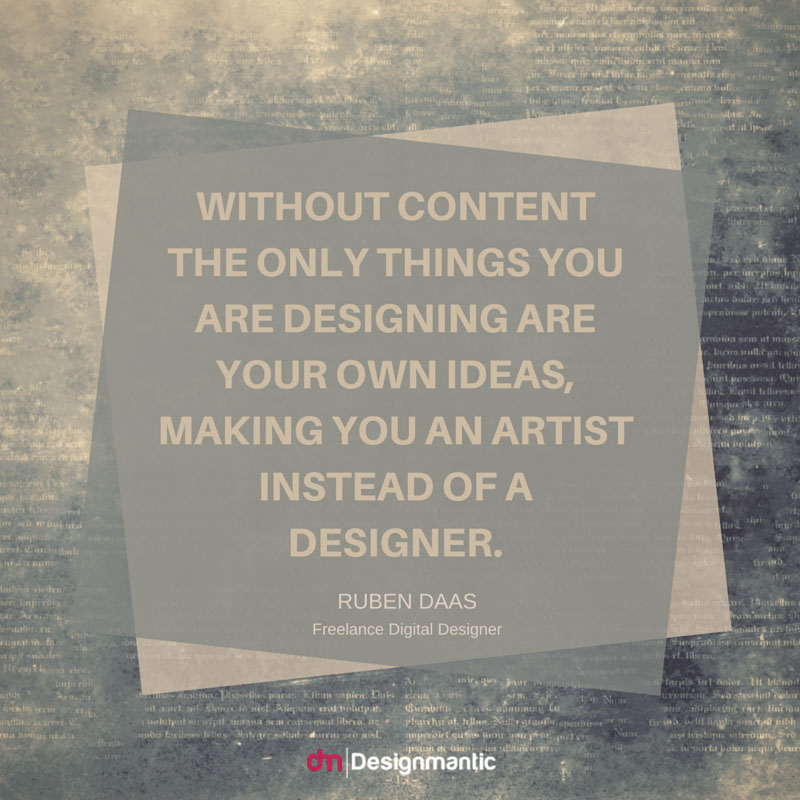
Without content the only things you are designing are your own ideas, making you a artist instead of a designer. That doesn’t mean a client knows what the best content is for their purpose. I always love extracting the ‘real’ content from clients by simply talking to them and asking the right questions. Sometimes you learn about some core principles, which the client didn’t even know themselves. Those principles are a great basis for a design.
Jason Sanchez, Front End Web Developer, has worked with the content vs design conundrum when it comes to creating and modifying web layouts. Here’s what he had to say:
Content should in the most part shape design, especially on the online platform. If you design your pages and then flow in content you will find that your content is now locked into the chosen design layout, which limits your creativity with the content (formatting, font usage etc. ). I like to let the content tell the story and dictate the design. You will find that your designs end up cleaner, elegant and most importantly relevant to the story you are telling.
When designing for web, the content needs to be planned out in advance. When doing an artistic piece considerations about content don’t count. Responsive web design takes care of content placement based on differing screen sizes. So even hardware considerations also come into play when it comes to designing your content.